THE ART OF INACTIVITY IN SALESFORCE: MARKING ACCOUNTS AND CONTACTS AS INACTIVE

When it comes to managing Accounts and Contacts in Salesforce, sometimes it’s not just about what’s active, but also about what’s not. The ability to mark Accounts and Contacts as inactive can provide significant benefits in terms of data cleanliness and user experience. However, with this feature still missing from Salesforce, users and admins have had to get creative with workarounds. In this blog post, we’ll explore the importance of marking records as inactive, the challenges users face without this feature, and the workarounds they can implement to achieve similar results.
Understanding the Significance
Why is marking Accounts and Contacts as inactive essential? Think about the clutter and confusion that can arise when inactive records continue to appear in picklists, search results, and reports. By marking them as inactive, users can focus on the information that matters, streamline their workflows, and make better data-driven decisions. For example, an account that has gone out of business might still have associated opportunities, and it’s crucial to exclude this account from active reports and list views to avoid distractions. The challenge lies in implementing this functionality within the existing Salesforce framework, but that’s where workarounds come into play.
Workarounds in Action
Custom Fields and Scoping Rules
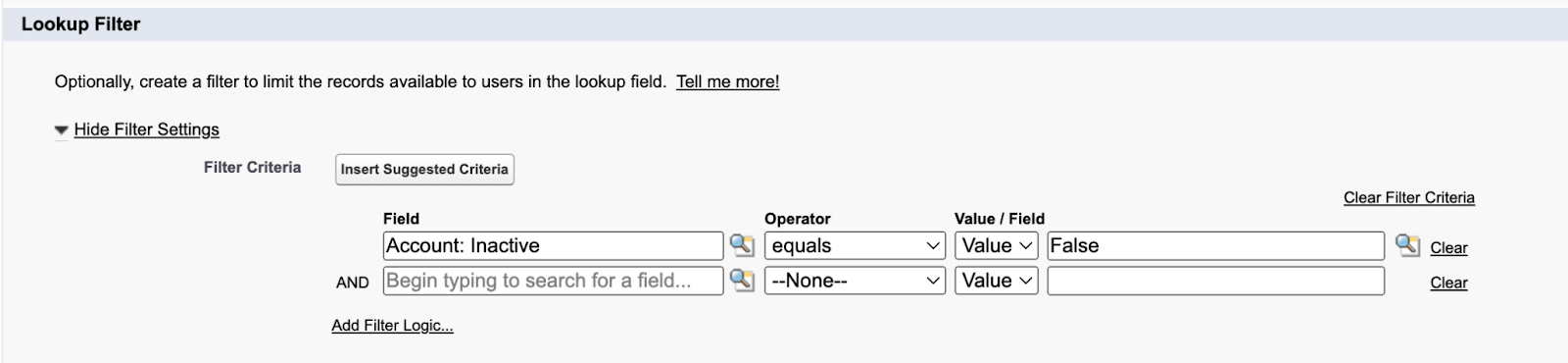
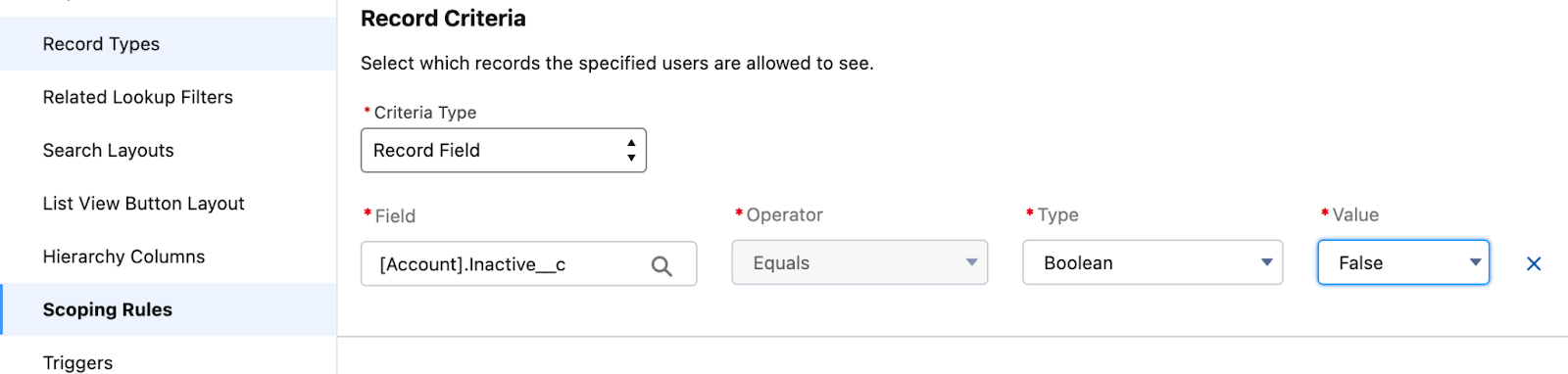
One of the most common workarounds is the use of custom fields to denote the inactive status of an Account or Contact. Admins can create a checkbox field, such as “Inactive,” and ensure it’s displayed prominently on record pages. To prevent these records from cluttering lookups and search results, you can use a combination of lookup filters or scoping rules to exclude inactive records. This way, users can find what they need quickly without being bombarded with irrelevant options.
Lookup Filter
Scoping Rule
Segmented List Views and ReportsTo further enhance visibility, admins can create specialized list views and reports that separate active and inactive records. For example, a list view with a filter for “Inactive = False” ensures that only relevant records are displayed, while an “Inactive” list view provides a quick snapshot of records that require attention. By defaulting list views and reports to show only active records, admins can streamline user experience and data analysis.Leveraging Duplicate RulesInactive records can often become a breeding ground for duplicate data. Using Salesforce’s duplicate management capabilities, admins can create custom duplicate rules that flag or prevent the creation of new records with similar attributes to inactive ones. This helps maintain data hygiene and prevents the reactivation of accounts or contacts that should remain inactive. For example, a duplicate rule might flag an incoming lead with the same email address as an inactive contact.
Conclusion
Although Salesforce hasn’t yet delivered a native solution for marking Accounts and Contacts as inactive, the workarounds outlined here can help users and admins achieve similar outcomes. Implementing custom fields, filters and scoping rules can transform the cluttered into the streamlined. If you’d like to contribute to this idea, checkout the idea article here. If you need help implementing these workarounds feel free to contact us here to learn more about our consulting services